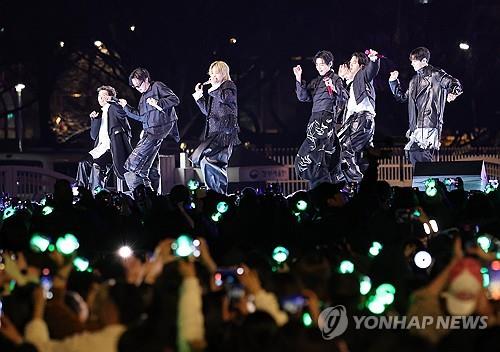
A 50-year-old man who threatened to ignite a "fireball" at BTS’s highly anticipated comeback performance in the heart of Seoul has been sentenced, marking a significant legal victory for artist safety and public order in the K-pop industry.
A Shadow Over the Purple Celebration
The global K-pop phenomenon BTS recently transformed Gwanghwamun Square—the historic and symbolic heart of Seoul—into a sea of purple to celebrate their return. However, behind the scenes of this cultural milestone, a chilling threat loomed. A man in his 50s, identified only as Mr. Kang, cast a shadow of fear over the event by repeatedly posting online threats to "throw gasoline" at the venue just two days before the performance.
On Wednesday, the Seoul Northern District Court delivered a firm message against such acts of public intimidation. Kang was sentenced to 10 months in prison, suspended for two years, along with 200 hours of community service and mandatory probation. The court’s decision underscores a growing legal zero-tolerance policy toward "cyber-terror" threats that target high-profile public gatherings.
The Significance of Gwanghwamun and the Weight of the Threat
For international fans, Gwanghwamun is more than just a public square; it is South Korea’s most iconic landmark, often compared to New York’s Times Square or London’s Trafalgar Square. A performance here is a testament to an artist's national prestige. By targeting such a high-traffic area during a BTS event, the perpetrator didn't just threaten the artists—he threatened the safety of thousands of fans (ARMY) and the general public.
The presiding judge noted the gravity of the offense, stating, "This crime obstructed public safety by instilling deep anxiety and fear in a large number of citizens. Such actions require strict punishment to prevent the escalation of blind hatred into physical violence." The court emphasized that while the threat was made online, the potential for real-world chaos and the psychological toll on the staff and fans were immense.
A Turning Point for Artist Protection and Fan Culture
This ruling comes at a time when the safety of K-pop idols and the management of large-scale crowds have become paramount global concerns. As K-pop’s influence expands, the industry is increasingly grappling with the evolution of "anti-fan" behavior from malicious comments to domestic terrorism threats.
Despite the alarming nature of the incident, the Gwanghwamun stage proceeded with impeccable order. BTS delivered a world-class performance, and ARMY demonstrated their trademark maturity, proving that the bond between the artist and the fandom is resilient against senseless hostility. This case serves as a landmark reminder that the digital space is no longer a shield for criminal behavior, and the safety of the "Purple Carpet" will be protected at all costs.